
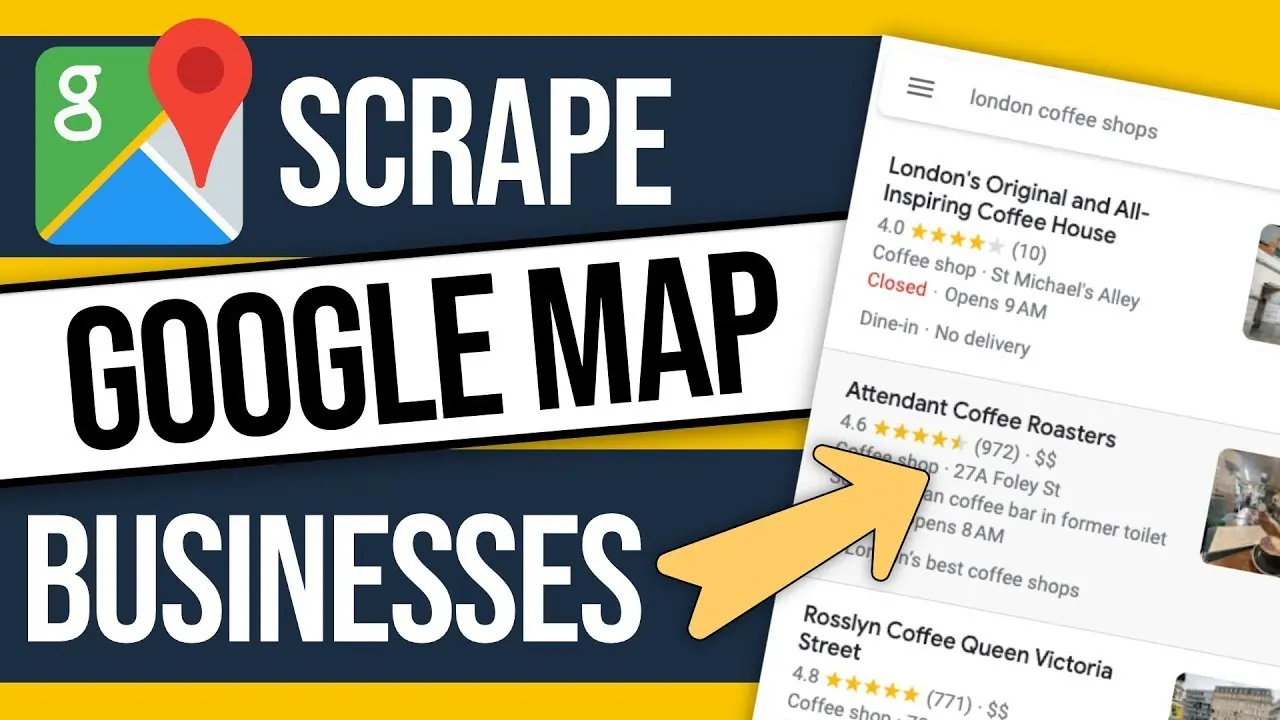
Elevate Your Marketing Game with a Google Map Data Scraper
Elevate Your Marketing Game with a Google Map Data Scraper
In today’s competitive landscape, a laser-sharp understanding of your target audience and their geographical presence is no longer a luxury – it’s a necessity. But how do you go beyond guesswork and gain truly actionable insights into the businesses, consumers, and trends shaping your local or global market? The answer lies in harnessing the power of Google Maps, a treasure trove of invaluable location-based data. And to unlock this treasure, you need a powerful tool: a Google Map Data Scraper.
This isn’t about shady data harvesting. It’s about strategic intelligence gatheringthat can transform your marketing efforts from broad strokes to precision strikes. Let’s dive deep into why a Google Map Data Scraper is your next essential marketing weapon.
Why Google Maps Data is Gold for Marketers
Google Maps isn’t just for finding the nearest coffee shop anymore. It’s a dynamic platform teeming with information that can fuel your marketing strategies in numerous ways:
Business Discovery & Lead Generation:Identify potential clients, partners, or competitors based on their industry, location, and even specific services offered. Imagine finding all the organic bakeries within a 10-mile radius of your new gluten-free product launch!
Market Research & Competitor Analysis:Understand the competitive landscape in your target areas. How many similar businesses exist? What are their operating hours, customer reviews, and contact information? This insight is crucial for positioning your offerings effectively.
Hyper-Local Marketing:Tailor your campaigns to specific neighborhoods, cities, or even streets. Understanding local demographics and business clusters allows for highly relevant and impactful advertising.
SEO Optimization:Discover relevant local keywords and phrases used by businesses and customers in your area. This data can inform your website content and local SEO strategy.
Event Planning & Logistics:Identify suitable venues, suppliers, or potential attendees based on location and business type.
Customer Segmentation:Analyze where your existing customers are located to understand your core market and identify areas for expansion.
What is a Google Map Data Scraper, Anyway?
At its core, a Google Map Data Scraper is a software tool designed to automatically extract specific information from Google Maps listings. Instead of manually clicking through countless search results and copy-pasting data (a tedious and error-prone process!), a scraper can efficiently gather:
Business Names:The official name of the establishment.
Addresses:Precise street addresses, cities, states, and zip codes.
Phone Numbers:Contact numbers for direct communication.
Website URLs:Links to business websites for further exploration.
Category/Industry:The type of business (e.g., “Restaurant,” “Plumber,” “Law Firm”).
Ratings & Reviews:Average star ratings and snippets of customer feedback.
Operating Hours:Daily opening and closing times.
Latitude & Longitude:Geocoordinates for precise mapping and analysis.
Other Details:Depending on the scraper, it might also extract business descriptions, photos, and more.
How Can a Google Map Data Scraper Elevate Your Marketing Game?
The raw data is only the beginning. The true power of a Google Map Data Scraper lies in how you leverage it. Here’s how it can revolutionize your marketing:
1. Precision Lead Generation:
Targeted Outreach:Instead of generic email blasts, craft personalized messages based on the specific services or products a business offers (gleaned from the scraper).
Niche Market Identification:Discover businesses within a very specific niche, allowing you to tailor your sales pitches and product offerings for maximum impact.
Partnership Opportunities:Identify complementary businesses that could benefit from collaboration or cross-promotion.
Example:A digital marketing agency specializing in e-commerce can scrape Google Maps for all online stores within a particular region, filtering by their product categories. This allows for highly targeted outreach to potential clients who demonstrably need their services.
2. Smarter Market and Competitor Analysis:
Understand Local Demand:Identify areas with a high concentration of businesses in your industry, indicating strong demand and a potentially lucrative market.
Analyze Competitor Footprint:Map out your competitors’ locations to identify underserved areas or potential expansion opportunities.
Benchmark Performance:Analyze competitor ratings and reviews to understand their strengths and weaknesses, informing your own customer service and product development.
Example:A new restaurant owner can scrape for existing restaurants in their chosen neighborhood, noting their cuisine types, price points (if available), and customer feedback. This helps them refine their unique selling proposition and target audience.
3. Unleash the Power of Hyper-Local Marketing:
Geofencing Campaigns:Use the extracted location data to create highly targeted geofenced advertising campaigns that reach users within specific geographical zones.
Local SEO Strategy:Identify common local search terms and popular business categories in your area to optimize your website and online listings.
Community Engagement:Discover local businesses for sponsorships, partnerships, or participation in community events, fostering local brand loyalty.
Example:A local retail store can scrape for all businesses within a 5-mile radius that don’t directly compete but attract a similar demographic. They can then offer joint promotions or discounts to cross-promote.
4. Enhanced Customer Understanding:
Visualize Your Customer Base:Plot your existing customer locations on a map to understand geographical clusters and identify areas for targeted marketing or service expansion.
Identify Underserved Customer Segments:If your customer data shows a gap in a particular area, use the scraper to identify businesses that might serve that segment, informing new product or service development.
Example:A subscription box service can analyze the geographic distribution of their subscribers. If they notice a strong cluster in a particular city, they can run targeted local social media campaigns to attract more subscribers from that area.
5. Streamlined Data Management and Integration:
Centralized Data Repository:Scraped data can be exported into spreadsheets (CSV, Excel) or databases, creating a centralized and organized repository of valuable business information.
Integration with CRM:Integrate this data with your Customer Relationship Management (CRM) system for a more comprehensive view of your leads and customers.
Automated Updates:Regularly run scrapers to keep your data fresh and up-to-date, ensuring your marketing strategies are based on current information.
Choosing the Right Google Map Data Scraper
The world of data scraping offers various solutions, from DIY Python scripts to robust commercial software. When selecting a scraper, consider:
Ease of Use:Are you comfortable with coding, or do you need a user-friendly, no-code solution?
Customization Options:Can you define the specific data points you want to extract?
Scalability:Can the scraper handle large volumes of data if needed?
Reliability and Accuracy:How consistent and accurate is the data it extracts?
Cost:Are there free options, or do you need to invest in a paid solution?
Ethical Considerations and Terms of Service:Ensure the scraper complies with Google’s Terms of Service and ethical data collection practices. Avoid scraping data that is explicitly protected or not intended for public consumption.
Ethical Considerations and Best Practices
It’s crucial to approach Google Map data scraping responsibly. Always:
Respect Google’s Terms of Service:Understand and adhere to the guidelines for using Google Maps data. Excessive or aggressive scraping can lead to IP bans.
Focus on Publicly Available Data:Scrape only information that is readily visible and intended for public access on Google Maps.
Use Data for Legitimate Marketing Purposes:Employ the data ethically to improve your services, understand your customers, and conduct legitimate business operations.
Consider Data Privacy:If you’re collecting data that could be linked to individuals (even indirectly), ensure you comply with relevant data privacy regulations.
The Future is Data-Driven, and Google Maps is Key
In the digital age, data is king, and Google Maps provides a uniquely rich and accessible source of location-based intelligence. By embracing a Google Map Data Scraper, you’re not just adopting a new tool; you’re investing in a strategic advantage that will allow you to:
Reach the Right Audience:With pinpoint accuracy.
Understand Your Market:Like never before.
Outmaneuver Your Competition:With informed strategies.
Deliver Personalized Experiences:That resonate with your customers.
Ready to stop guessing and start knowing? Invest in a Google Map Data Scraper and unlock a new dimension of marketing effectiveness. The insights you need are waiting to be discovered.