
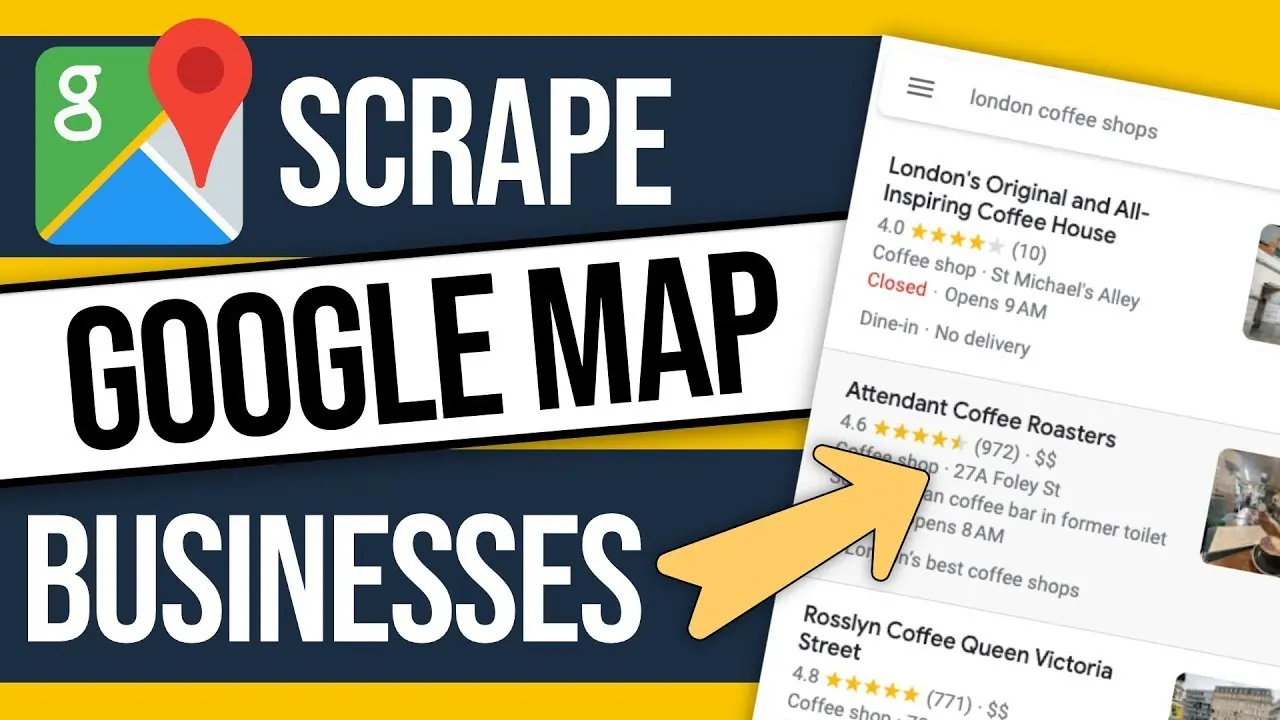
Gain Market Dominance with a Savvy Google Map Data Scraper
Gain Market Dominance with a Savvy Google Map Data Scraper
In today’s hyper-competitive business landscape, simply having a good product or service isn’t enough. You need to understand your market, your customers, and your competitors with an almost surgical precision. This is where Google Maps datasteps in, offering a treasure trove of information that can catapult your business from a contender to a market leader. But how do you unlock this valuable intel? The answer lies in a savvy Google Maps data scraper.
Gone are the days of manual research and guesswork. A well-crafted data scraper is your secret weapon, allowing you to gather, analyze, and leverage insights that your competitors might be missing. Let’s dive deep into how this powerful tool can help you achieve market dominance.
Why Google Maps Data is Your Golden Ticket
Before we get into the “how,” let’s understand the “why.” Google Maps isn’t just a navigation tool; it’s a living, breathing directory of businesses, their locations, operating hours, reviews, and so much more. This data provides a granular view of:
Local Business Landscape:Identify existing businesses in specific niches and locations.
Customer Demographics & Behavior:Analyze review sentiment, identify popular services, and understand customer needs.
Competitor Analysis:Track competitor locations, services offered, pricing (where available), and customer feedback.
Market Gaps & Opportunities:Discover underserved areas or unmet customer needs.
Lead Generation:Find potential clients based on their industry, location, and services.
Logistics & Supply Chain Optimization:Map out supplier locations, distribution routes, and customer delivery points.
The Power of a Savvy Google Maps Data Scraper
A “savvy” scraper goes beyond simply pulling raw data. It’s intelligent, customizable, and designed to extract the most relevant and actionable
information for your specific business goals. Here’s how it empowers you:
1. Unveiling Your Competition with Precision
Competitor Mapping:Visually map out all your direct and indirect competitors within a defined geographical area. This helps you understand their density, market saturation, and proximity to potential customers.
Service/Product Offering Analysis:Scrape details about the services or products each competitor offers. This allows you to identify areas where you excel, where you lag, and where there might be niche opportunities.
Review Sentiment Analysis:The real gold often lies in customer reviews. A savvy scraper can extract review text, ratings, and even timestamps. Analyzing this data can reveal common pain points, customer satisfaction levels, and areas where competitors are excelling or failing. This information is invaluable for refining your own offerings and marketing strategies.
Operational Insights:Understand competitor opening hours, contact information, and even website links. This helps you stay informed about their operational cycles and identify potential inefficiencies.
2. Identifying Untapped Markets and Niches
Location-Based Opportunity Identification:Are there areas with a high demand for your services but a low supply of providers? A scraper can pinpoint these “white spaces” on the map, guiding your expansion efforts.
Emerging Trends Detection:By analyzing search trends and business listings on Google Maps, you can spot emerging industries or popular services in specific regions before they become mainstream.
Targeted Outreach:For businesses looking to expand or enter new territories, scraping Google Maps data can identify clusters of potential customers or businesses that align with your service offerings.
3. Supercharging Your Lead Generation and Sales Efforts
Hyper-Targeted Prospecting:Instead of generic outreach, identify businesses that perfectly fit your ideal client profile. Scrape their location, industry, and contact information to create highly personalized sales pitches.
Understanding Client Needs:By analyzing reviews and business descriptions of potential clients, you can gain a deeper understanding of their challenges and tailor your solutions accordingly.
Building Strategic Partnerships:Identify complementary businesses in your vicinity for potential collaborations or referral partnerships.
4. Optimizing Your Marketing and SEO Strategies
Local SEO Enhancement:Understand how your competitors are optimizing their Google My Business (GMB) profiles. Scrape their GMB categories, keywords used in their descriptions, and the types of photos they display. This can inform your own GMB optimization strategy.
Content Marketing Insights:Identify common questions customers ask in reviews or topics frequently discussed in competitor descriptions. This can be a goldmine for generating relevant and engaging content for your blog, social media, and website.
Geotargeted Marketing Campaigns:Leverage location data to run highly effective, geographically focused advertising campaigns on platforms like Google Ads and social media.
Choosing and Using Your Savvy Scraper Wisely
Not all scrapers are created equal. A truly “savvy” scraper possesses these key characteristics:
Customization:The ability to define specific search parameters, locations, and data fields to extract is paramount.
Scalability:Can it handle large volumes of data efficiently?
Data Quality and Accuracy:Does it extract clean, accurate, and well-structured data?
Ethical and Legal Compliance:Crucially, ensure your scraper operates within Google’s Terms of Service and respects data privacy regulations. This often means using proxy servers and adhering to rate limits. Always prioritize ethical data collection.
Ease of Use:A user-friendly interface or straightforward integration with your existing tools is essential.
Data Export Options:Can you export data in formats like CSV, Excel, or JSON for easy analysis in your preferred tools?
Tips for Savvy Scraping:
Define Your Goals Clearly:Before you start scraping, know exactly what information you need and why.
Start Small and Iterate:Begin with specific queries and gradually expand your scope as you refine your understanding.
Invest in Quality Proxies:This is crucial for avoiding IP bans and ensuring uninterrupted scraping.
Clean and Analyze Your Data Thoroughly:Raw data is only useful if you can extract meaningful insights from it.
Stay Updated:Google’s platform evolves. Ensure your scraper tool is regularly updated to maintain its effectiveness.
The Bottom Line: Data is Your New Competitive Edge
In the digital age, data is currency, and Google Maps data is a particularly valuable denomination. By investing in and employing a savvy Google Maps data scraper, you’re not just gathering information; you’re building a strategic advantage. You’re gaining the intelligence to outmaneuver your competitors, uncover hidden opportunities, and ultimately, dominate your market. So, stop guessing, start scraping, and watch your business thrive.