
Transforming Business Growth with a Google Map Data Scraper
Transforming Business Growth with a Google Map Data Scraper
In today’s hyper-competitive business landscape, understanding your market, your competitors, and your customers is no longer a luxury – it’s a necessity for survival and growth. While traditional market research methods have their place, they can often be time-consuming, expensive, and prone to missing crucial, real-time insights. This is where the power of data, specifically data gleaned from a seemingly ubiquitous platform like Google Maps, becomes a game-changer.
Enter the Google Map Data Scraper.
Far from being a tool solely for tech-savvy individuals, a well-implemented Google Map Data Scraper can unlock a treasure trove of actionable intelligence, empowering businesses of all sizes to make smarter decisions, optimize strategies, and ultimately, accelerate their growth.
What Exactly is a Google Map Data Scraper?
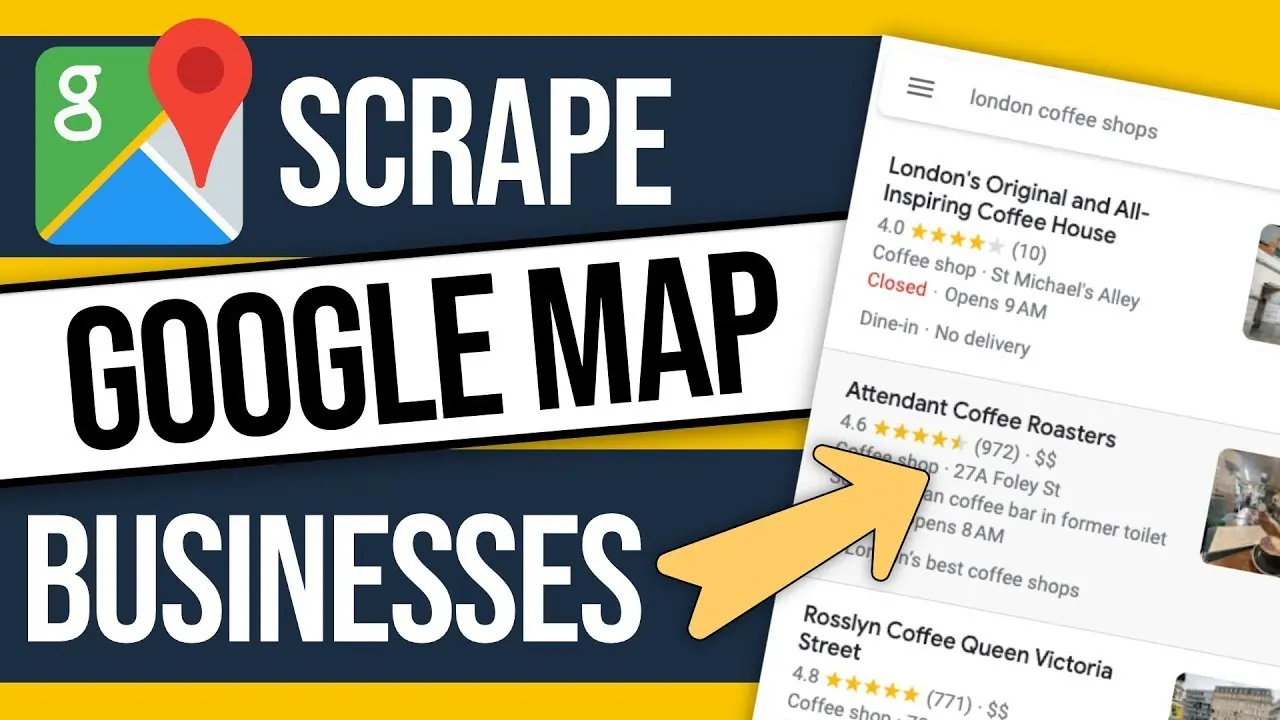
At its core, a Google Map Data Scraper is a software tool designed to automatically extract information from Google Maps. Think of it as a highly efficient digital researcher that can systematically collect data points that are publicly available on the platform. This data can include a wide array of valuable information, such as:
Business Listings:Names, addresses, phone numbers, websites, operating hours, categories, ratings, reviews.
Location-Based Information:Geographic coordinates, proximity to landmarks or competitors, population density (inferred), traffic patterns.
Customer Insights:Review sentiment, common customer complaints or praises, service preferences.
Competitive Landscape:Number of competitors in a specific area, their service offerings, pricing (if available in reviews), customer reception.
Market Trends:Identification of emerging businesses, popular business categories in certain neighborhoods.
Why is Google Map Data So Powerful for Business Growth?
Google Maps is more than just a navigation tool; it’s a dynamic directory of businesses and a hub for user-generated content. The data it holds is a direct reflection of real-world economic activity and consumer behavior. Here’s why harnessing this data can be transformative:
Hyper-Local Market Understanding:Businesses can gain unparalleled insights into their immediate surroundings, identifying underserved areas or saturated markets.
Informed Expansion Strategies:Before opening a new branch or expanding into a new territory, a scraper can provide data on existing competition, customer demographics, and potential demand.
Enhanced Lead Generation:Identifying potential clients based on their industry, location, and even specific needs mentioned in reviews.
Competitor Analysis:Understanding competitor strengths and weaknesses, their pricing strategies, and their customer service approaches.
Product/Service Improvement:Analyzing customer reviews to identify common pain points, desired features, or areas where your offerings can be improved.
Targeted Marketing Campaigns:Segmenting audiences based on location, interests inferred from businesses they frequent, and sentiment expressed in reviews.
Operational Efficiency:Optimizing delivery routes, identifying ideal locations for new facilities, or understanding peak operational times.
Real Estate and Investment Opportunities:Identifying promising locations for commercial real estate or investment based on business activity and growth indicators.
Practical Applications: Transforming Your Business with Scraped Data
Let’s delve into some specific ways a Google Map Data Scraper can directly impact your business growth:
1. Supercharging Your Sales and Lead Generation:
Prospecting for New Clients:Imagine a plumbing company wanting to find new residential leads. A scraper can identify all the houses in a specific neighborhood built before a certain year (indicating potential for plumbing issues) or those with reviews mentioning plumbing problems.
Identifying B2B Opportunities:A software company specializing in POS systems could scrape restaurants in a target city to identify those that might be using outdated systems or have negative reviews about their current technology.
Niche Market Identification:A bakery wanting to expand could scrape areas with a high concentration of young families or specific ethnic communities to tailor their offerings and marketing.
2. Mastering Your Competitive Landscape:
Competitor Mapping:Visualize all your competitors in a given area, their locations, and their service radius.
Benchmarking Performance:Analyze competitor ratings and reviews to understand what customers like and dislike about them. This provides a roadmap for improving your own customer experience.
Identifying Market Gaps:Are there specific services or product categories that are consistently missing or poorly represented in a particular area? This presents a golden opportunity.
3. Refining Your Marketing and Customer Engagement:
Hyper-Local SEO Optimization:Understand which local search terms are most relevant to businesses in your area and tailor your website content and Google My Business profile accordingly.
Personalized Outreach:Crafting marketing messages that resonate with specific local customer segments based on their expressed needs and preferences.
Sentiment Analysis for Brand Improvement:By analyzing thousands of reviews, you can identify recurring themes, both positive and negative, and use this feedback to enhance your products, services, and customer support.
4. Driving Smart Business Expansion and Location Strategy:
Site Selection for New Branches:Before investing in a new physical location, scrape data on foot traffic (inferred), competitor saturation, and the presence of complementary businesses in potential areas.
Franchise Growth Analysis:For franchisors, a scraper can help identify high-potential territories for new franchisees by analyzing market demand and competitive landscape.
Getting Started: Tools and Considerations
While the concept is straightforward, building a robust Google Map Data Scraper from scratch can be complex. Fortunately, several options exist:
Pre-built Scrapers/Software:Numerous commercial tools are available, offering user-friendly interfaces and pre-defined data extraction capabilities. These are often the easiest and quickest way to get started.
APIs (with caution):Google Maps offers APIs that can be used for data retrieval. However, it’s crucial to understand and adhere to their terms of service regarding data scraping to avoid legal issues. Direct scraping of Google Maps through unofficial means can violate their terms of service and lead to account suspension or legal repercussions.Always prioritize ethical and compliant data acquisition.
Custom Development:For highly specific needs, businesses may opt for custom-built scrapers developed by in-house teams or external developers.
Important Considerations:
Terms of Service:This cannot be stressed enough.Always be aware of and adhere to Google’s Terms of Service. Unofficial or aggressive scraping can lead to IP bans, account suspensions, and legal issues.
Data Accuracy and Reliability:While Google Maps data is generally reliable, it’s not infallible. Manual verification of critical data points is always recommended.
Data Volume and Processing:Scraping large datasets requires efficient processing and storage solutions.
Ethical Implications:Use the data responsibly and ethically. Avoid using it for malicious purposes or to unfairly disadvantage competitors.
The Future is Data-Driven, and Google Maps is a Goldmine
In conclusion, a Google Map Data Scraper is not just a tool; it’s a strategic asset that can fundamentally transform how businesses operate and grow. By unlocking the wealth of information residing within this familiar platform, companies can gain a competitive edge, make more informed decisions, and build stronger, more sustainable businesses.
If you’re looking to move beyond guesswork and embrace a truly data-driven approach to growth, it’s time to explore the powerful potential of a Google Map Data Scraper. The insights you uncover could be the catalyst for your next significant business breakthrough.